
Et si la robotique offrait une toute nouvelle approche de la mobilité dans votre quotidien ?
Évaluez votre éligibilitéPour des millions de personnes vivant avec une maladie ou après un accident, la vie consiste à retrouver les gestes du quotidien. Les solutions de mobilité disponibles jusqu’ici limitent l’accès à la station debout et aux échanges à hauteur de regard.
Né de plusieurs années de prise en charge de milliers de personnes qui souhaitaient marcher au-delà de la rééducation, Eve est conçu pour permettre aux personnes en fauteuil roulant de retrouver station debout et mobilité, en toute autonomie et mains libres, en présence d’un compagnon formé.

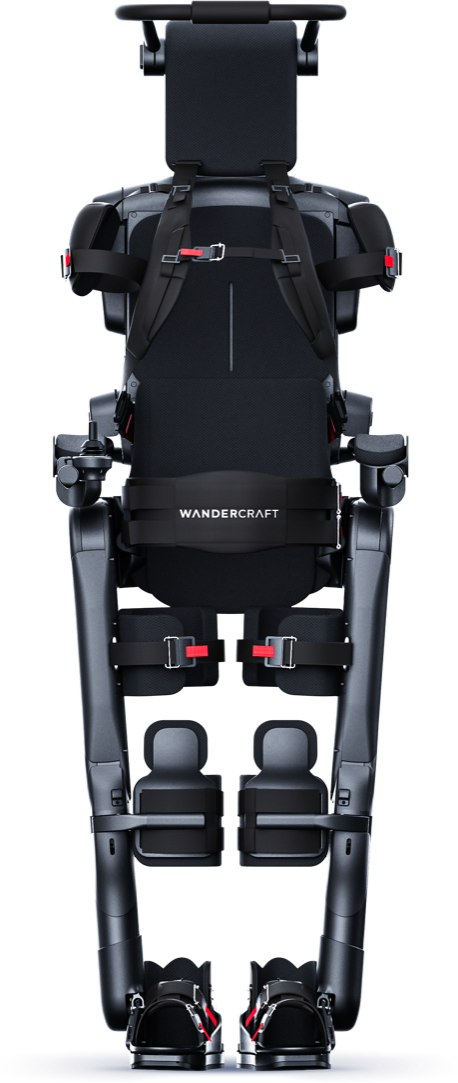
L’exosquelette personnel Eve a reçu l’autorisation de la FDA sous le numéro K260381 pour les adultes présentant une lésion médullaire, quel que soit le niveau neurologique.
Contactez un expert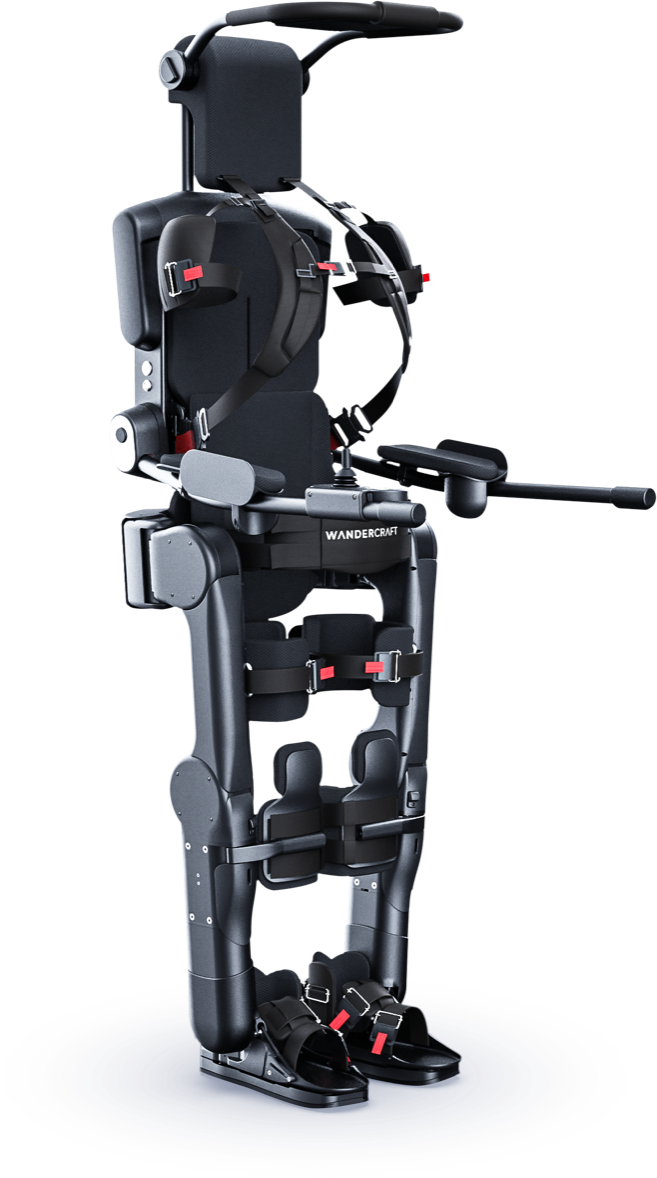
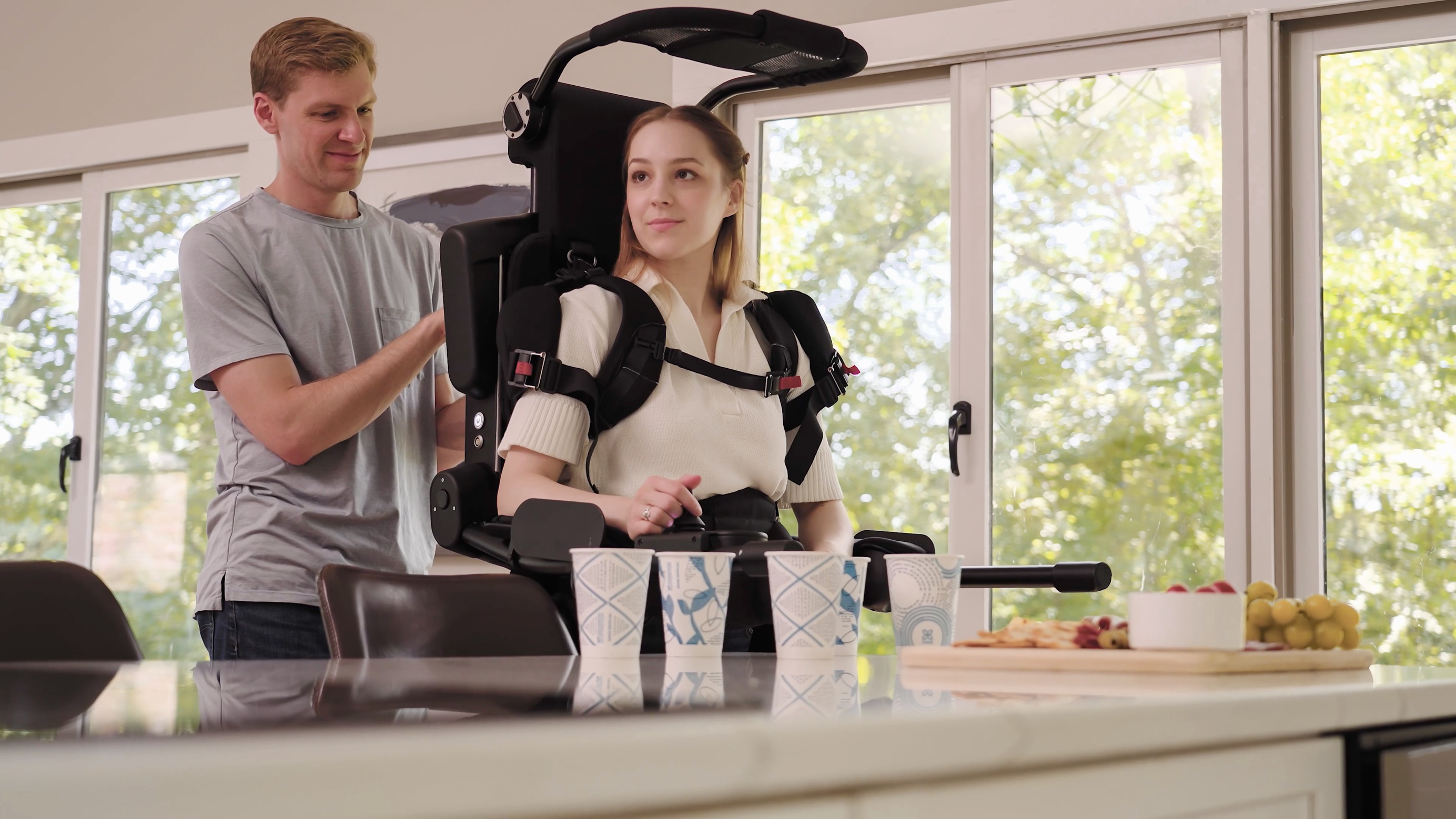
Discuter à hauteur de regard, préparer un gâteau, se brosser les dents, échanger avec ses proches en position debout.
Issu d’une robotique médicale éprouvée dans plus de 150 centres cliniques à travers le monde.
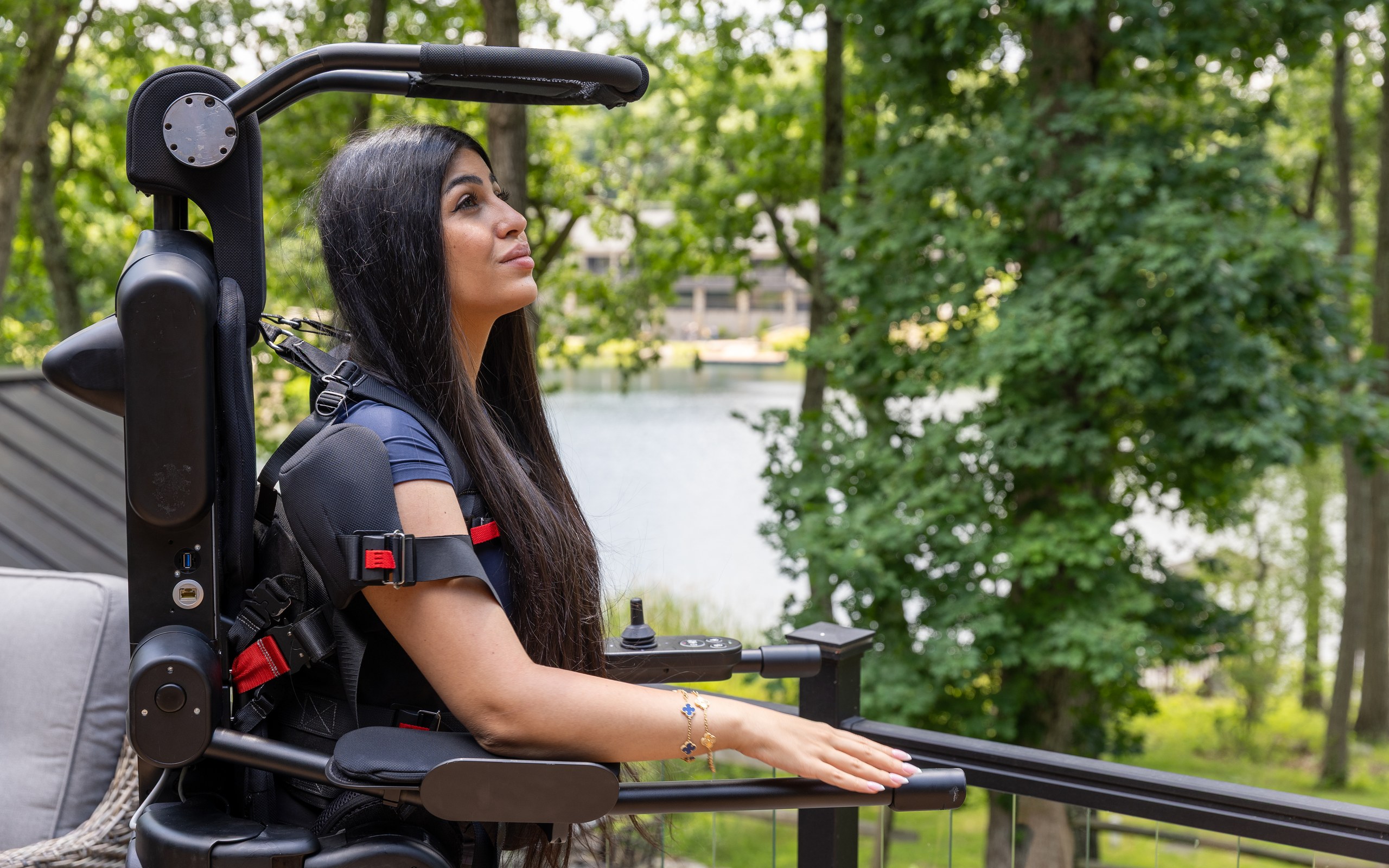
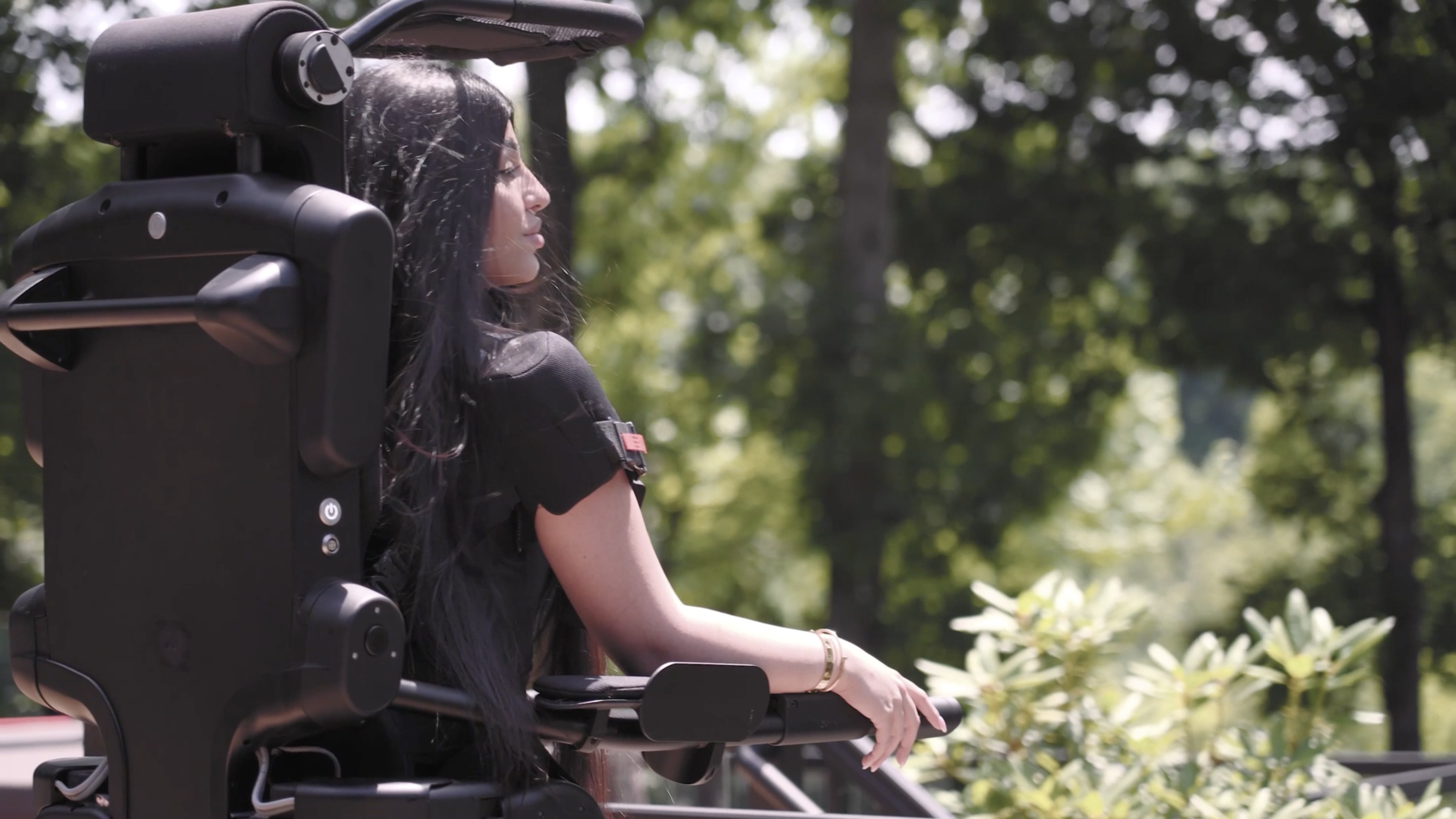
Conçu pour les espaces où vous vivez, à l’intérieur comme sur votre terrasse, entouré de vos proches, en toute confiance et en toute maîtrise.
Construit avec des composants de qualité médicale, conçu pour un usage quotidien et une fiabilité à long terme. Les réglages de taille comme le logiciel sont personnalisés pour chaque utilisateur.
Chaque parcours avec Eve commence par une évaluation personnalisée. Nous vous accompagnons ensuite tout au long du processus, avec une formation spécialisée et un support de maintenance.

d’autonomie

sans béquilles

multidirectionnels

degrés de liberté
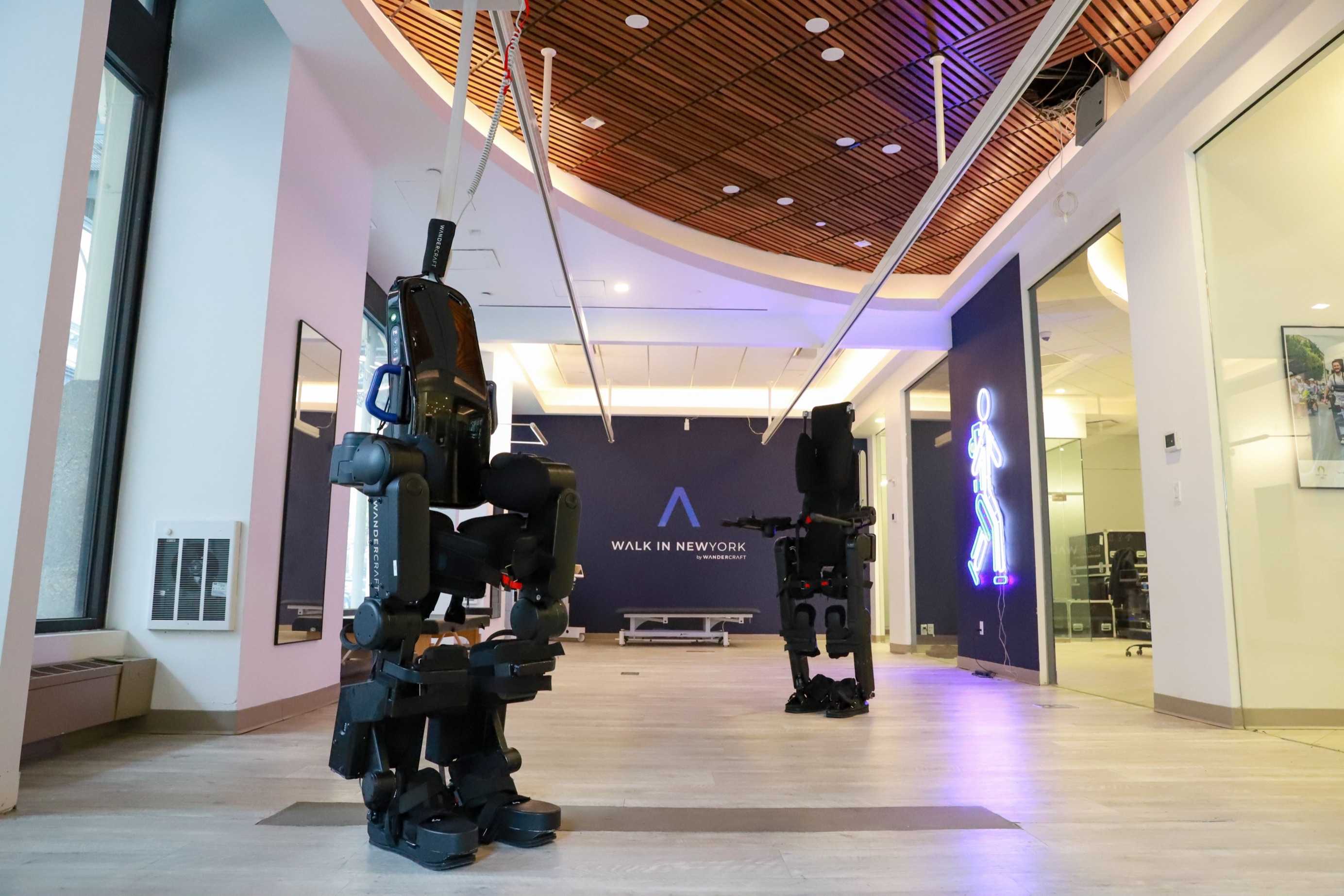
Eve est délivré à l’issue d’un parcours d’évaluation structuré, qui commence par une pré-évaluation à distance. Nos cliniciens organisent ensuite des séances d’essai avec vous et votre compagnon, afin de confirmer votre éligibilité et de vous guider : vous savez exactement à quoi vous attendre.
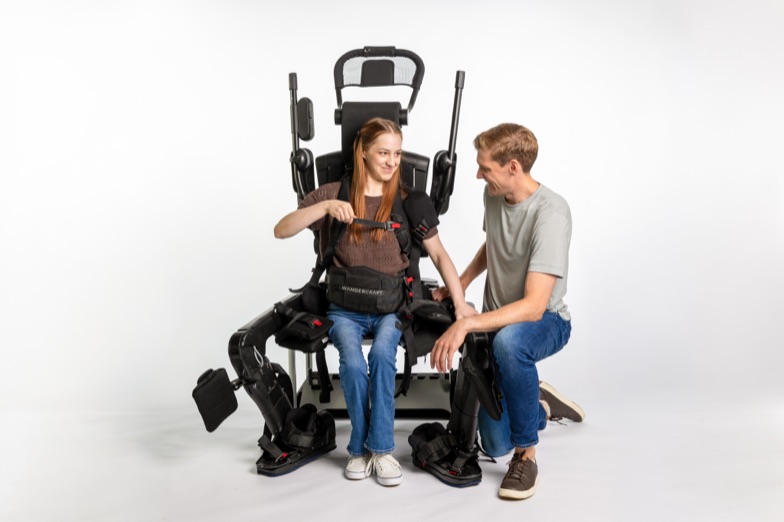
Une fois votre éligibilité confirmée, vous et votre compagnon commencez votre parcours de formation avec des formateurs certifiés. Grâce à un programme efficace de 5 séances d’environ deux heures chacune, suivies en une semaine seulement ou réparties sur 30 jours, vous obtiendrez votre certification.
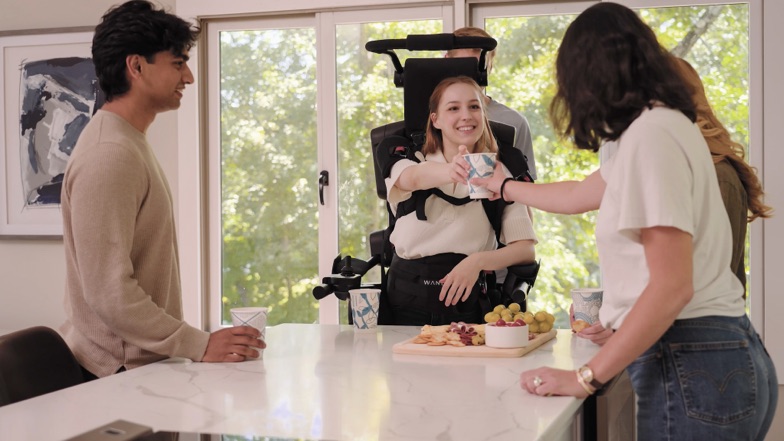
Une fois que vous et votre compagnon serez certifiés, vous serez prêts à accueillir votre exosquelette Eve chez vous et à retrouver la station debout dans la vie de tous les jours !
Questions

Eve est un exosquelette personnel auto-équilibré pour la vie de tous les jours. Il vous permet de vous lever et de marcher les mains libres — sans béquilles ni déambulateur — pour vous retourner, attraper un objet et utiliser vos mains en position debout : rester debout devant un plan de travail, discuter à hauteur de regard, accéder au lavabo de la salle de bains. Parce qu’Eve se stabilise de manière autonome, l’autonomie en position debout est possible même sans contrôle du tronc, en présence d’un accompagnant formé. Eve est conçu pour compléter votre fauteuil roulant, pas pour le remplacer.
Eve s’adresse aux adultes de 18 ans et plus présentant une lésion médullaire, quel que soit le niveau neurologique, capables d’utiliser Eve avec la télécommande et de tolérer la position debout. Il existe également des limites physiques, car Eve est ajusté à vos mesures : jusqu’à 100 kg (220 lb) et 1,94 m (6 ft 4 in), dans des plages définies de longueur de cuisse, de longueur de jambe, de largeur de bassin et de mobilité articulaire. Eve est un dispositif sur prescription : la décision finale revient toujours au professionnel de santé habilité qui le prescrit, après une évaluation individuelle.
Oui. Eve a reçu l’autorisation de la FDA sous le numéro K260381 pour les adultes présentant une lésion médullaire, quel que soit le niveau neurologique. C’est un dispositif médical de classe II disponible uniquement sur prescription : il doit être prescrit par un professionnel de santé habilité. Eve sera commercialisé aux États-Unis à partir du 17 septembre 2026. D’autres régions suivront.
Oui, à chaque utilisation. Eve s’utilise en présence d’un accompagnant formé, qui suit la formation et obtient sa certification avec vous, et qui reste à portée de bras pendant que vous marchez. C’est également lui qui vous aide à sortir du dispositif en toute sécurité en cas de problème. Les accompagnants font eux aussi l’objet d’une évaluation, avec notamment un test physique démontrant qu’ils sont capables de retenir le dispositif en cas de perte d’équilibre.
Sur des surfaces intérieures planes, et sur les surfaces planes des espaces en plein air faisant partie de votre bâtiment : un patio, une terrasse, une cour. La surface doit être ferme, sèche et lisse — carrelage ou autre revêtement dur et lisse, moquette à poils ras, ou béton dans ces espaces en plein air. Eve n’est pas destiné aux escaliers, aux pentes ou aux rampes, y compris les bateaux de trottoir conformes à l’ADA, aux sols mouillés ou verglacés, aux zones de forte affluence, aux parkings ou aux voies de circulation, et il n’est pas destiné au sport. Il ne doit jamais être utilisé pour traverser une voie publique, car sa vitesse de marche est trop lente pour que cela soit sûr.
Vous et votre accompagnant vous formez ensemble et êtes certifiés ensemble, après une évaluation clinique et un ajustement personnalisé. Le programme comprend cinq séances d’environ deux heures chacune, assurées par des formateurs certifiés, qui alternent explications et mise en pratique. Il couvre les transferts, l’utilisation de la télécommande, la marche sur surfaces planes, les activités de la vie quotidienne ainsi que les procédures de sécurité et d’urgence, et se conclut par une évaluation portant à la fois sur l’utilisation normale et sur les situations d’urgence. Il peut être suivi en une semaine seulement ou réparti sur environ 30 jours.

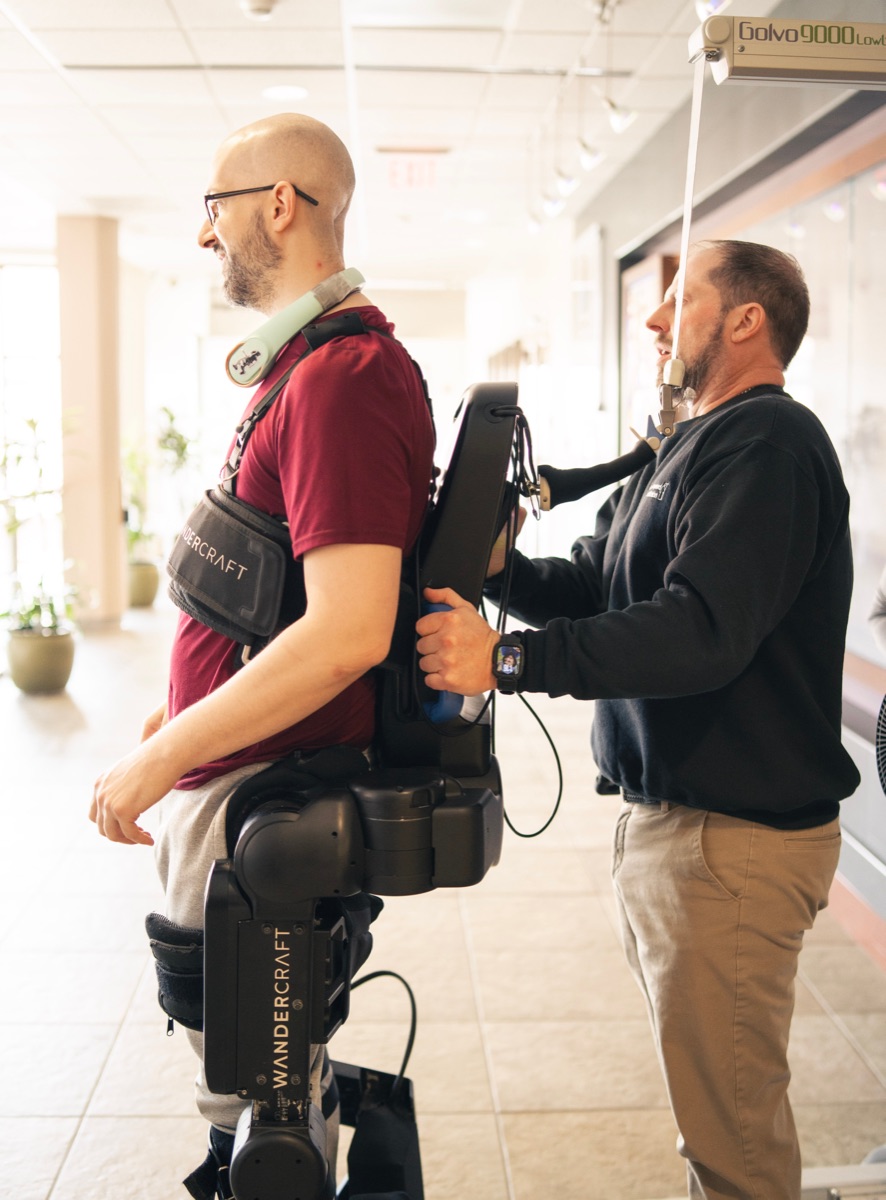
L’exosquelette mains libres au service de la rééducation des patients dans le monde entier.
Ekso Bionics rejoint Wandercraft : deux pionniers s’unissent pour faire progresser et élargir la locomotion robotique
Lire le communiqué de presse